
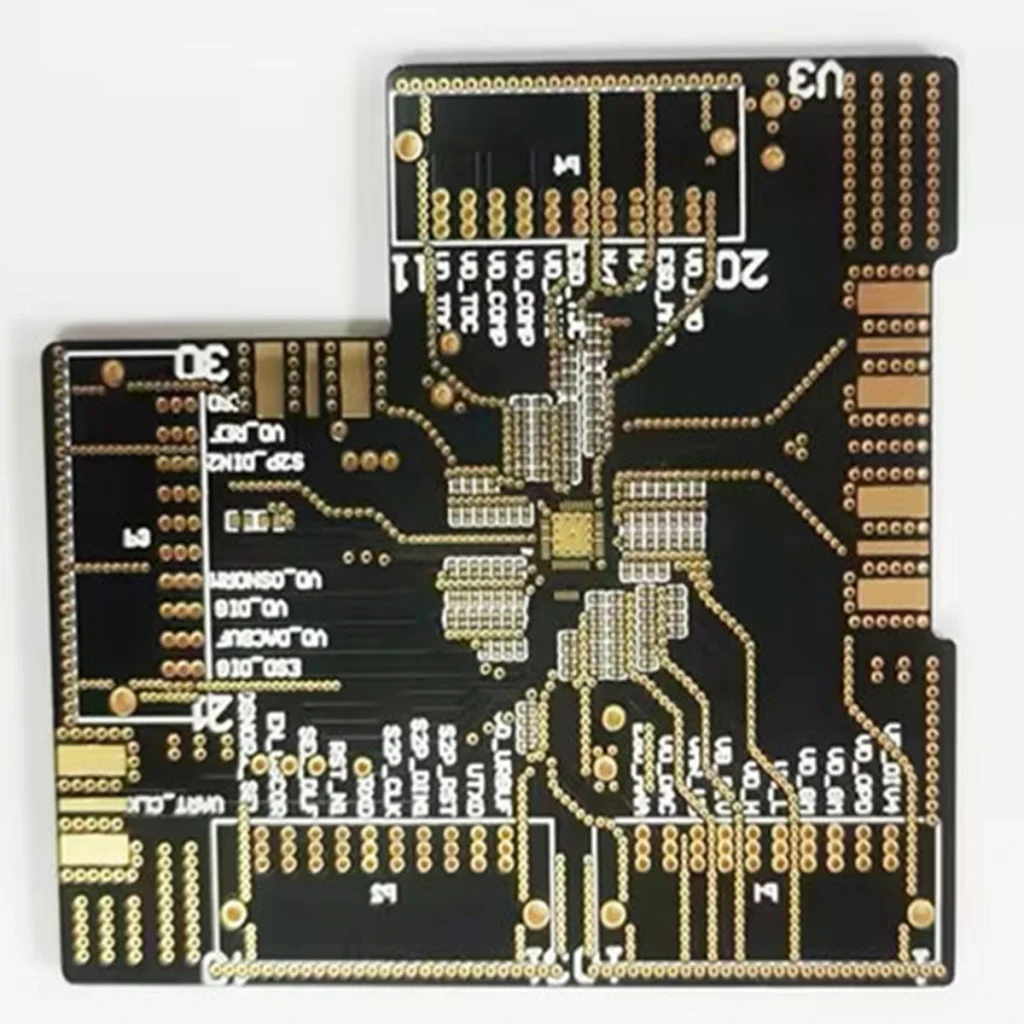
Standard Process
Metal Base Materials:Aluminum (5052/6061), Copper (C1100), Stainless Steel
Thermal Conductivity:3.0 W/m-K to 12.0 W/m-K (Ultra-high dielectric options)
Layer Count:1 – 4 Layers (Including Multilayer Hybrid MCPCB)
Board Thickness:0.5mm – 4.0mm (Standard: 1.6mm / 2.0mm / 3.2mm)
Min. Trace Width / Space 3 mil / 3 mil (0.075mm) for high-density power modules
Min. Drill Hole Diameter:0.15mm (Pr:ecision Mechanical or Laser Drilling)
Breakdown Voltage:≥ 4000V AC / 6000V DC (Certified for 800V EV platforms)
Dielectric Thickness:50μm, 75μm, 100μm, 150μm (High-precision control)
Surface Finish:ENEPIG (Best for AI/Automotive), ENIG, HASL-LF, OSP
Solder Mask Color:Super White (Reflectivity >90%), Black, Green, Blue
Thermal Resistance:< 0.05 °C-cm²/W (Advanced ceramic-filled dielectrics)
CNC Routing / V-Cut:Tolerance: ±0.1mm (High-speed precision routing)
Reliability Testing:100% AOI & E-Test, Thermal Shock (-40°C to +150°C)
Product Details
Thermal management has become the defining challenge in modern PCB design, especially as high‑power electronics, LED systems, automotive electrification, and AI hardware push power density and miniaturization to new limits. Metal Core Printed Circuit Boards (MCPCB), also known as thermal PCBs or insulated metal substrate (IMS) PCBs, replace traditional FR‑4 with a thermally conductive metal base to deliver superior heat dissipation, mechanical stability, and long‑term reliability. This article reviews MCPCB fundamentals, material systems, key advantages, and high‑demand applications, then introduces 2026 cutting‑edge manufacturing technologies from Shenzhen Hongda Circuit Technology Co., Ltd. to elevate thermal performance, production efficiency, and quality consistency for next‑generation electronics.
1. What is a Metal Core PCB (MCPCB)?
A Metal Core PCB uses a solid metal layer as the core or backing substrate instead of conventional fiberglass‑reinforced epoxy laminates. This metal core acts as an integrated heat spreader, rapidly channeling heat away from power components to external heat sinks or ambient environments. MCPCBs typically feature a three‑layer structure:
- Circuit layer: High‑conductivity copper foil (1–10 oz) for electrical routing
- Dielectric layer: Thermally conductive, electrically insulating polymer film
- Metal base: Aluminum, copper, or special alloy for structural support and heat dissipation
MCPCBs are widely called thermal PCBs, metal‑backed PCBs, or insulated metallic substrates (IMS). Unlike standard PCBs, they are purpose‑built for high‑heat, high‑vibration, and high‑power operating environments.
2. MCPCB Core Materials & Structural Specifications
2.1 Base Metal Selection
MCPCB substrates rely on metals with high thermal conductivity and good manufacturability:
- Aluminum Core PCB: Most widely used, cost‑effective, lightweight, and easily machined. Ideal for general lighting, LED drivers, and consumer electronics.
- Copper Core PCB / Heavy Copper PCB: Ultra‑high thermal conductivity, perfect for extreme thermal loads in automotive, industrial power, and AI servers.
- Special Alloys: Custom composite metals for balanced conductivity, rigidity, and corrosion resistance in harsh environments.
Brass and steel are rarely recommended due to high hardness and poor machinability, which complicate routing and miniaturization.
2.2 Typical Physical Parameters
- Metal core thickness: 30–125 mil (custom thinner/thicker available)
- Copper foil thickness: 1–10 oz for high‑current carrying capacity
- Thermal conductivity: 8–9x faster than standard FR‑4 PCBs
3. Key Advantages of Metal Core PCBs
3.1 Ultra‑High Thermal Dissipation
MCPCB laminates provide low thermal resistance via high‑thermal‑conductivity dielectric layers. Heat transfers nearly an order of magnitude faster than FR‑4, drastically lowering component junction temperatures and extending service life.
3.2 Excellent Mechanical & Environmental Stability
The metal substrate boosts rigidity, reduces warpage, and withstands high mechanical stress and vibration. This makes MCPCBs ideal for automotive, industrial, and outdoor applications.
3.3 Simplified Thermal Design
MCPCBs reduce or eliminate the need for thermal vias, complex heat sinks, and extra cooling components. This shrinks form factors, lowers assembly costs, and speeds up manufacturing.
3.4 Improved Performance & Reliability
Effective heat control stabilizes electrical parameters, reduces thermal drift, and lowers failure rates from heat stress—a top cause of PCB malfunction in compact designs.
4. Typical Applications of MCPCBs
MCPCBs excel in high‑heat and high‑power scenarios where conventional cooling is insufficient:
- High‑Power LED Systems: Streetlights, automotive lighting, backlight units, industrial and general lighting
- Power Electronics: Telecommunication power supplies, high‑voltage regulators, DC‑DC converters, inverters
- Automotive & Transportation: EV/HEV motor controls, battery management systems, automotive LED lighting
- Renewable Energy: Solar photovoltaic inverters, power optimizers
- Industrial & Motion Control: Drives, servo systems, power modules
5. 2026 Advanced MCPCB Manufacturing Technologies (Shenzhen Hongda Circuit)
To meet 2026 demands for higher power density, AI computing, automotive electrification, and 5G infrastructure, Shenzhen Hongda Circuit Technology Co., Ltd. has integrated next‑generation processes into its MCPCB production lines.
5.1 Ultra‑High Thermal Dielectric Materials
We adopt 2026‑grade high‑thermal‑conductivity dielectric films (3.2–8.0 W/m·K) with exceptional insulation stability. These materials drastically reduce thermal resistance while maintaining voltage isolation, supporting high‑voltage automotive and industrial applications.
5.2 Copper Pedestal & Embedded Thermal Column Technology
Our advanced copper pedestal fabrication creates direct vertical heat channels from components to the metal base. Combined with laser‑drilled thermal via matrices, this design lowers thermal resistance by up to 40% compared to standard MCPCBs, critical for high‑power ICs and AI accelerators.
5.3 Precision Heavy Copper Processing (Up to 10 oz)
Our 2026 upgraded lines support stable manufacturing of 1–10 oz heavy copper layers on inner and outer layers. Advanced etching eliminates undercutting and resin starvation, enabling exceptional current‑carrying capacity and heat spreading for power modules.
5.4 AI‑Driven Smart Manufacturing & Quality Control
We use AI‑enabled automated optical inspection (AOI), real‑time lamination monitoring, and predictive maintenance to boost yield, consistency, and traceability. This aligns with Industry 4.0 and ensures automotive‑grade reliability.
5.5 Green & Sustainable Manufacturing
Our processes use eco‑friendly, RoHS‑ and REACH‑compliant materials and low‑waste lamination. Recyclable aluminum and copper substrates support circular‑economy goals for global customers.
5.6 High‑Density Interconnect (HDI) + MCPCB Hybrid Integration
Combining HDI microvia, sequential lamination, and metal‑core thermal design, we produce compact, high‑performance boards for slim high‑power lighting, sensors, and in‑vehicle electronics.
6. Design & Manufacturing Guidelines (2026 Best Practices)
- Prioritize SMT components; minimize plated through‑holes (PTH) to avoid short risks. If PTH is required, use enlarged holes filled with non‑conductive epoxy for isolation.
- Optimize thermal layout: Place heat‑generating devices over copper pedestals or direct thermal paths to the metal base.
- Match metal thickness and dielectric type to target thermal resistance, operating temperature, and voltage stress.
- Leverage DFM analysis early to streamline production and lower costs.
7. Conclusion
Metal Core PCBs remain the gold standard for thermal management in high‑power electronics. Backed by 2026 advanced materials, intelligent manufacturing, and innovative thermal structures, Shenzhen Hongda Circuit Technology Co., Ltd. delivers aluminum core, copper core, and custom alloy MCPCBs with superior thermal performance, mechanical strength, and reliability. We support customers in LED, automotive, industrial power, solar, and AI hardware with prototyping, mass production, and PCBA assembly to turn advanced designs into market‑ready products.
About Shenzhen Hongda Circuit Technology Co., Ltd.
Shenzhen Hongda Circuit Technology Co., Ltd. specializes in high‑end PCB R&D and manufacturing, including MCPCB, HDI, rigid‑flex, RF, and heavy‑copper boards. With 2026 smart factories and advanced thermal management solutions, we serve global automotive, industrial, lighting, and 5G customers with stable quality, fast delivery, and customized technical support.