Spectrum Analyzer PCB Manufacturer: How Do You Choose One?
Choosing a spectrum analyzer PCB manufacturer requires more than comparing unit prices. OEM buyers need to evaluate high-frequency material compatibility, controlled-impedance fabrication, multilayer stackup feasibility, inspection methods, and the supplier’s ability to support prototype builds and repeat production. The right manufacturing partner should review your actual design requirements, identify fabrication risks before production, and provide a clear quotation based on your technical files.
What Manufacturing Capabilities Does a Spectrum Analyzer PCB Require?
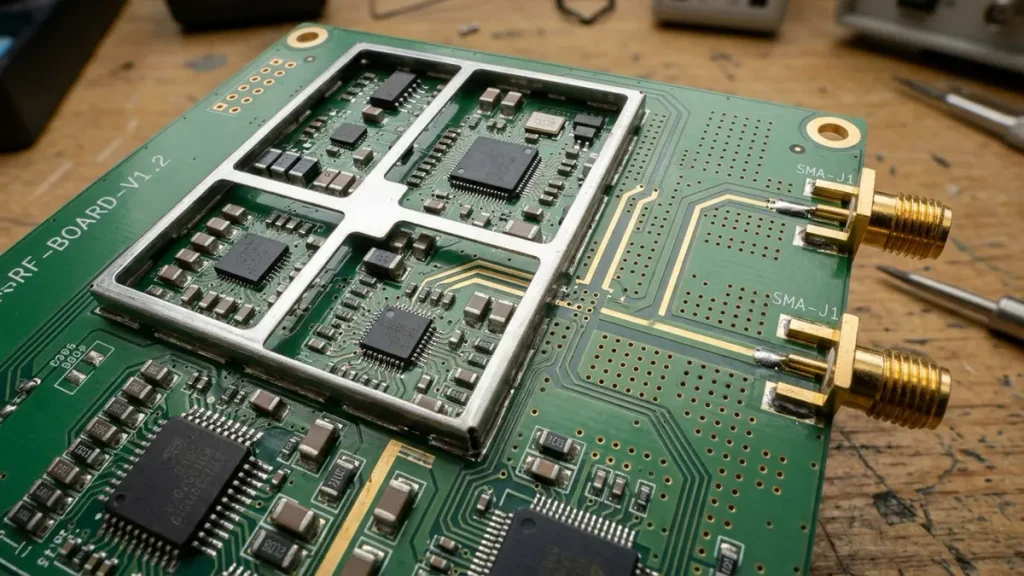
Spectrum Analyzer PCB RF Front-End Architecture
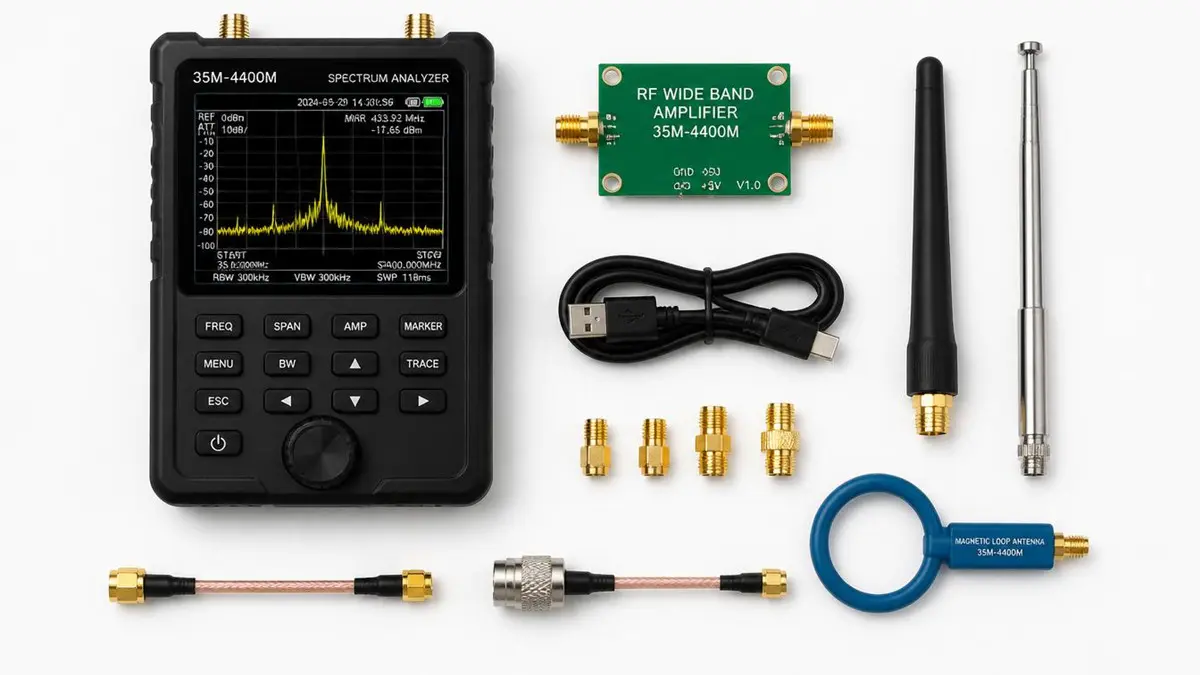
A spectrum analyzer PCB may combine sensitive RF signal paths, analog front-end circuits, frequency-conversion stages, intermediate-frequency processing, and digital control circuitry. The required manufacturing capabilities depend on the instrument’s frequency range, circuit architecture, signal-loss budget, board dimensions, and component density.
Before selecting a manufacturer, identify the following requirements:
- Layer count and stackup: Determine the number of layers, dielectric thicknesses, reference planes, and routing constraints from the approved design.
- Substrate material: Select the laminate according to operating frequency, insertion-loss requirements, dielectric properties, thermal conditions, and budget.
- Impedance control: Specify the required characteristic impedance and tolerance for applicable transmission lines.
- Copper thickness: Match copper weight to current requirements, trace geometry, etching limitations, and signal-routing constraints.
- Registration and drilling: Confirm that layer alignment, via structures, and finished-hole requirements are compatible with the proposed fabrication process.
- Surface finish: Choose ENIG, immersion silver, OSP, or another suitable finish according to assembly, contact, and reliability requirements.
Not every spectrum analyzer requires an ultra-HDI structure or the finest available circuit geometry. A conventional multilayer PCB may be appropriate for control and digital processing sections, while a specialized RF section may require tighter control of materials, geometry, and impedance.
The manufacturing plan should follow the actual design rather than assume that the most advanced process is always the best choice.
Which PCB Materials Should You Specify for Spectrum Analyzer RF Circuits?
Material selection affects transmission-line loss, impedance consistency, thermal behavior, and manufacturing cost. Buyers should select materials according to the RF path requirements rather than choosing a laminate solely because it is marketed as a high-frequency material.
When Is Standard FR-4 Appropriate?
FR-4 can be suitable for many control circuits, lower-frequency sections, and digital processing areas, depending on the electrical requirements. Its suitability for a particular RF path must be assessed against operating frequency, dielectric loss, trace length, and the instrument’s signal-loss budget.
A blanket rule that FR-4 cannot be used above a particular frequency is not technically reliable. The correct decision depends on the specific laminate grade and circuit performance requirements.
When Should You Consider Rogers or Other Low-Loss Laminates?
Specialized low-loss laminates may be appropriate when the RF design requires lower dielectric loss, more predictable electrical properties, or improved performance at higher frequencies.
Depending on the design, engineers may evaluate Rogers RO4003C, RO4350B, PTFE-based laminates, or other qualified materials. The exact material should be confirmed against the approved stackup and the manufacturer’s processing capabilities.
A hybrid stackup can combine different materials when the RF and digital sections have different electrical requirements. However, mixed-material construction requires review of thermal expansion, bonding systems, lamination compatibility, and the overall stackup.
For application-specific manufacturing information, review Hongda Circuit’s high-frequency PCB manufacturing capabilities.
Before requesting a quotation, provide the preferred laminate grade, layer structure, finished board thickness, copper weight, and any restrictions on material substitutions.
How Should You Evaluate Impedance Control and RF Signal Integrity?
Controlled impedance is a manufacturing requirement for transmission lines designed to operate at a specified characteristic impedance. Many RF interfaces use 50-ohm single-ended transmission lines, although the actual requirement must come from the circuit design.
A manufacturer should be able to review the proposed trace geometry, dielectric thickness, copper thickness, and relevant material properties to assess whether the requested impedance can be fabricated.
Buyers should confirm four points before placing an order:
- Impedance specification: Identify the required impedance values and tolerances in the fabrication documentation.
- Stackup feasibility: Confirm that the proposed stackup supports the required trace geometry and dielectric structure.
- Verification method: Establish whether impedance coupons, TDR measurements, or other specified verification methods are required and available.
- Documentation: Agree on the inspection records and test reports that will be supplied with the order.
Impedance testing can help verify transmission-line characteristics, but it does not independently establish the complete RF performance of a finished spectrum analyzer.
Insertion loss, return loss, crosstalk, grounding, shielding, component selection, and circuit layout may also affect system performance. These characteristics should be evaluated using the appropriate design analysis and electrical validation methods.
How Can PCB Fabrication Affect Spectrum Analyzer Performance?
PCB fabrication influences whether the manufactured board matches the dimensions, material structure, and electrical requirements of the design. Small deviations may matter when a design has tight RF performance margins.
How Do Layer Registration and Etching Affect RF Traces?
Trace width, spacing, copper thickness, and dielectric geometry influence transmission-line characteristics. Etching variation can change the effective trace dimensions, while layer-registration errors can affect alignment between connected structures.
A suitable manufacturing review should identify critical dimensions and specify tolerances that the fabricator can support.
Why Do Grounding and Signal Isolation Matter?
Sensitive RF paths can be affected by unwanted coupling from nearby digital clocks, switching circuits, or other signal sources. Ground-plane continuity, return-current paths, circuit partitioning, and shielding arrangements should therefore be considered during design review.
These are primarily design and system-level concerns, but PCB fabrication must preserve the relevant copper geometry, layer structure, and clearances specified by the approved design.
Does Every Spectrum Analyzer PCB Need HDI or mSAP?
No. HDI, microvias, and fine-line processing are useful when component density, routing constraints, or board dimensions justify them. They are not automatic requirements for spectrum analyzer boards.
For a design with dense fine-pitch components or complex interconnections, review Hongda Circuit’s HDI PCB manufacturing capabilities. For less demanding designs, a standard multilayer process may offer a better balance of cost, yield, and production efficiency.
The final process should be selected after reviewing the Gerber files, stackup, drilling data, and component layout.
What Quality Checks Should You Require from a Spectrum Analyzer PCB Supplier?
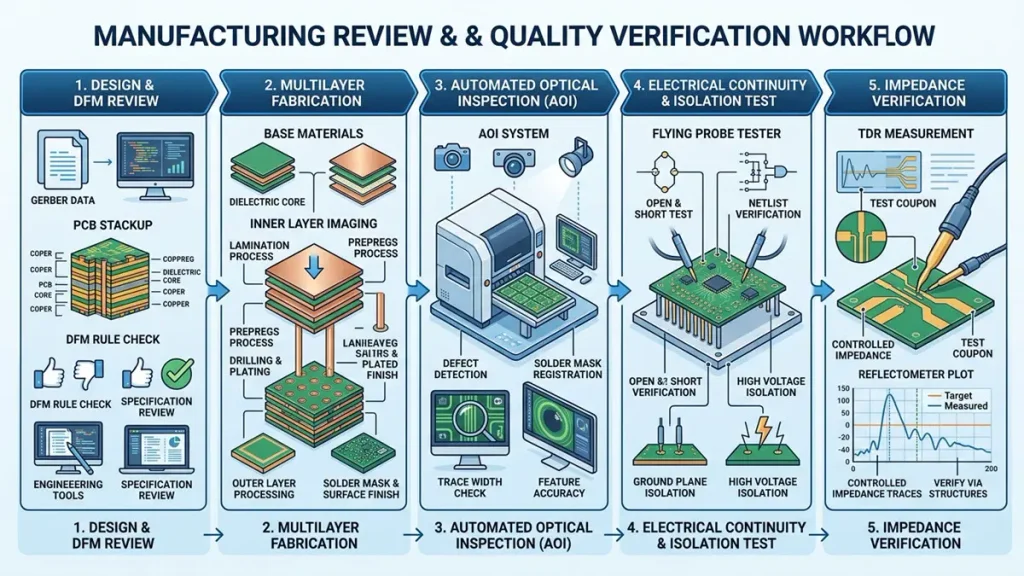
Spectrum Analyzer PCB Manufacturing and Quality Inspection
A reliable supplier should define the inspection methods that apply to the order and clarify which results can be documented. Buyers should distinguish between bare-board manufacturing verification, assembled-board testing, and final instrument performance validation.
| Quality Check | What It Helps Verify |
|---|---|
| Design and DFM review | Potential manufacturing conflicts, missing information, and fabrication risks |
| Automated optical inspection (AOI) | Visible circuit-pattern defects, including certain opens and shorts |
| Electrical continuity and isolation testing | Electrical connectivity and isolation against the specified test criteria |
| Impedance testing, when specified | Characteristic impedance of applicable test structures or transmission lines |
| X-ray inspection, when applicable | Internal solder-joint or structural features that cannot be inspected optically |
| Assembly inspection | Component placement, soldering quality, polarity, and assembly workmanship |
| Functional or RF validation, when contracted | Performance against the agreed test plan and acceptance criteria |
No single inspection method detects every possible defect. For example, AOI does not prove impedance compliance, and a bare-board electrical test does not demonstrate that the completed spectrum analyzer meets its sensitivity, dynamic-range, or measurement-accuracy specifications.
Before production, agree on the applicable acceptance criteria, test coverage, documentation, and responsibility for any system-level testing.
Hongda Circuit publishes its quality-system information on its certifications page. Buyers should verify the applicable certificate scope and validity for their specific procurement requirements.
What Should You Compare When Choosing a Spectrum Analyzer PCB Manufacturer?
A useful supplier comparison should consider technical suitability, manufacturing consistency, communication, and total project cost—not just the initial quotation.
| Evaluation Factor | Questions to Ask the Supplier |
|---|---|
| Material capability | Can the manufacturer process the specified laminate and stackup? |
| Impedance requirements | Can it support the requested impedance tolerance and agreed verification method? |
| Manufacturing tolerances | Are the required trace, spacing, drilling, and registration limits achievable? |
| Quality documentation | Which inspection records and test reports are included? |
| Engineering support | Can the supplier review manufacturing files and identify unresolved issues before fabrication? |
| Prototype support | Can prototype requirements be reviewed before the design moves into repeat production? |
| PCBA services | Can the supplier support the required SMT, through-hole, or mixed assembly process? |
| Production planning | Are the quoted lead time, material availability, and order quantity clearly defined? |
| Change management | How are revisions, approved deviations, and production changes controlled? |
Ask for evidence that relates directly to your project. A capability statement is useful, but the final decision should be based on the manufacturer’s ability to meet the specific drawing, material, tolerance, inspection, and delivery requirements.
For broader manufacturing and procurement information, visit the PCB manufacturing services page. Email: sales@pcbkr.com
Should You Source Spectrum Analyzer PCB Fabrication and PCBA from One Supplier?
Using one supplier for bare-board fabrication and assembly can simplify coordination, particularly when the project requires specialized materials, fine-pitch components, or a controlled transition from prototype to production.
However, a one-stop arrangement is valuable only when the supplier can support the actual scope of work.
Before choosing a combined PCB and PCBA service, confirm:
- Whether bare-board fabrication is performed by the supplier or an approved manufacturing partner.
- Whether component sourcing is required and who is responsible for approved parts and substitutions.
- Which SMT, through-hole, and mixed-assembly processes are available.
- Whether assembly inspection, X-ray inspection, or additional electrical testing applies to the project.
- Whether functional testing or RF characterization is included, separately quoted, or performed by the customer.
- How fabrication and assembly revisions are coordinated.
For projects requiring assembly, review Hongda Circuit’s PCB assembly services.
A clear statement of work helps prevent misunderstandings about whether the quotation covers bare PCBs, assembled boards, component procurement, or a more complete manufacturing package.
What Information Should You Send to Get a Spectrum Analyzer PCB Quote?
A complete RFQ enables a manufacturer to assess feasibility, calculate costs, identify missing specifications, and provide a more meaningful lead-time estimate.
Prepare the following information whenever available:
- Gerber files or another mutually accepted manufacturing-data format.
- NC drill files and a fabrication drawing.
- Layer count, stackup, finished board thickness, and copper weights.
- Required laminate manufacturer and material grade.
- Controlled-impedance values, tolerances, and test requirements.
- Surface finish, solder mask, and any special fabrication requirements.
- Required quantity for prototypes, pilot production, and volume orders.
- Assembly files, BOM, centroid data, and assembly drawings if PCBA is required.
- Target delivery date, destination, and any required inspection documentation.
If some information is not finalized, state which specifications remain open. The manufacturer can then identify the details that must be resolved before production rather than making unsupported assumptions.
A useful quotation should clearly identify the quoted scope, material assumptions, tooling or setup charges, inspection requirements, lead time, and any exclusions.
How Do You Choose a Reliable Spectrum Analyzer PCB Manufacturer?
Choose a manufacturer that can demonstrate compatibility with your actual design, explain how critical requirements will be verified, and document the agreed manufacturing and inspection scope.
Before issuing a purchase order, confirm that the supplier has reviewed the relevant manufacturing files, accepted the material and stackup requirements, agreed on impedance and tolerance specifications, and clarified the deliverables for quality documentation.
For prototype projects, also establish how design revisions and manufacturing feedback will be handled before repeat production. For volume orders, review change control, traceability, and the process for managing nonconforming boards.
Shenzhen Hongda Circuit Technology Co., Ltd. provides PCB manufacturing and PCBA-related services for customers evaluating custom circuit-board production. The appropriate solution depends on the project’s electrical requirements, board construction, assembly scope, and acceptance criteria.
Request a Spectrum Analyzer PCB Manufacturing Quote
Are you sourcing a PCB manufacturing partner for a spectrum analyzer, RF test instrument, or laboratory measurement device?
Send your available Gerber files, stackup, material requirements, impedance specifications, order quantity, and target lead time to Shenzhen Hongda Circuit Technology Co., Ltd.
Our team can review the information provided, clarify manufacturing requirements, and prepare a quotation based on the agreed project scope.
Email: sales@pcbkr.com
Website: PCB Manufacturing Services
To help us evaluate your request efficiently, indicate whether you need bare PCB fabrication, PCBA, or both.
Frequently Asked Questions
What Is the Most Important Requirement When Choosing a Spectrum Analyzer PCB Manufacturer?
The most important requirement is the manufacturer’s ability to meet the specific design and fabrication requirements of your board. Evaluate material compatibility, impedance requirements, manufacturing tolerances, inspection methods, and the supplier’s ability to document compliance with the agreed specifications.
Can FR-4 Be Used for a Spectrum Analyzer PCB?
Yes, in suitable applications. FR-4 may be appropriate for control circuits, digital sections, or some RF designs when the selected laminate meets the electrical requirements. Higher-frequency or lower-loss signal paths may require specialized laminates. The decision should be based on operating frequency, insertion loss, routing geometry, and the system’s performance budget.
Do Spectrum Analyzer PCBs Always Require Rogers Materials?
No. Rogers materials and other low-loss laminates may be appropriate for demanding RF paths, but they are not mandatory for every spectrum analyzer board. Material selection should consider frequency, dielectric loss, stackup compatibility, manufacturability, and cost.
What Files Are Needed for a Spectrum Analyzer PCB Manufacturing Quote?
Typically, the manufacturer needs Gerber or equivalent manufacturing files, NC drill data, a fabrication drawing, stackup details, material requirements, copper weights, surface finish, quantities, and target delivery dates. For PCBA, also provide the BOM, component placement data, and assembly drawings where applicable.
Can One Supplier Handle Spectrum Analyzer PCB Fabrication and Assembly?
Potentially, yes. Some suppliers offer both PCB fabrication and PCBA services. Before placing an order, verify the scope of in-house and outsourced work, component sourcing responsibilities, available inspection methods, and whether functional or RF testing is included in the quotation.
About Author
David Chen LinkedIn Profile
David Chen is a Senior RF/PCB Process Engineer at Shenzhen Hongda Circuit Technology Co., Ltd., with over 12 years of experience in high-frequency PCB fabrication, impedance-controlled stack-up design, and Rogers/PTFE laminate processing. He also boasts an extensive professional background in PCBA manufacturing, PCBA testing, and PCBA optimization, with specialized expertise in high-precision PCBA fault analysis and rigorous PCBA reliability testing. The author has worked with high-layer-count server PCB fabrication, ultra-low-loss backplane stackups, and thermo-mechanical reliability optimization for AI infrastructure projects involving 112G and 224G PAM4 architectures. Skilled in complex circuit design and cutting-edge advanced PCB manufacturing processes, he delivers solutions that elevate product durability and performance across industrial applications. His technical articles focusing on PCBA manufacturing workflows and testing methodologies are widely cited by industry peers and technical platforms, and have gained attention and recognition from industry colleagues