What Should OEMs Look for in a Refrigerator PCB Manufacturer?
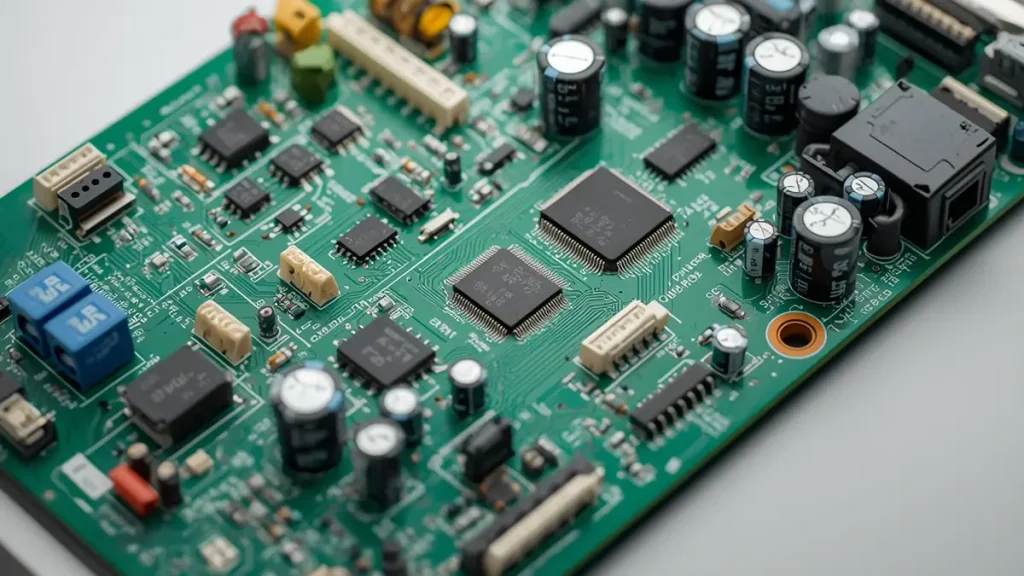
Base Material: FR-4
Layer Count: 1– multilayer, according to design
Board Thickness: Customized according to design
Copper Thickness: Customized according to current and design requirements
Min. Trace Width / Spacing: According to Gerber data and fabrication requirements
Min. Hole Size: According to drill files and fabrication requirements
A reliable refrigerator PCB manufacturer must deliver more than a bare circuit board. OEM buyers need consistent PCB fabrication, accurate component assembly, controlled materials, and production quality aligned with their product specifications. Hongda Circuit supports refrigerator PCB fabrication and PCBA assembly, including SMT and THT processes, for prototype, small-batch, and production projects. Send your Gerber files, BOM, and target quantity to sales@pcbkr.com for a project review and quotation.
1. Refrigerator PCB Applications and Control Board Architecture
A refrigerator PCB is an electronic circuit board used to control, monitor, or interface with electrical and electronic functions inside a refrigerator. Depending on the product design, a refrigerator may contain one main control board or several separate PCB assemblies.
For OEM manufacturers, the first step in sourcing a refrigerator PCB is to define the board’s actual function, electrical interfaces, component requirements, and production scope. Different refrigerator models can use different control architectures, so the manufacturing specification should be based on the customer’s approved design rather than a generic board description.
Main Refrigerator Control Board
The main control board coordinates signals and control functions defined by the refrigerator’s electronic design. Depending on the model, it may interface with temperature sensors, fans, door switches, user-interface modules, compressor control circuits, and other electrical subsystems.
From a manufacturing perspective, the main control board may combine low-voltage control circuits, power-related components, connectors, relays, and signal-processing components. The actual component selection and circuit layout are determined by the OEM design.
PCB fabrication and PCBA assembly must therefore follow the released Gerber data, BOM, assembly drawings, and applicable electrical requirements.
Compressor and Inverter Control Circuits
Compressor control requirements vary between refrigerator platforms. Some designs use a main control board to operate a compressor-related circuit, while others use a separate inverter control PCB or dedicated power-control assembly.
These designs may involve power components, switching devices, connectors, sensing circuits, and control signals. The PCB manufacturer should review the customer’s board data and assembly requirements before confirming the production process.
For inverter-related boards, the OEM should provide the applicable electrical specifications, component requirements, and test criteria. A PCB assembly supplier should not assume that a general-purpose refrigerator control board and an inverter control board have identical fabrication or inspection requirements.
Temperature Sensor and Defrost Control Boards
Temperature monitoring and defrost management are common functions in refrigerator electronics. Depending on the system architecture, related circuits may be integrated into the main control board or implemented through separate modules.
Manufacturing considerations include connector orientation, sensor interfaces, component placement, solder-joint quality, and the electrical characteristics specified by the customer.
Where a separate sensor or defrost-related PCB is used, the manufacturer should work from the correct board revision and assembly documentation to avoid interface or component mismatches.
Display and User Interface Boards
A refrigerator display PCB may connect buttons, indicator LEDs, touch controls, displays, communication interfaces, or other user-interface components.
These boards can have different mechanical and assembly requirements from the main control board. Connector positioning, board dimensions, component height, and mounting-hole locations may be important to the final product integration.
For OEM production, the display PCB and main control PCB should be managed as separate manufacturing items when their Gerber files, BOMs, revisions, or inspection requirements differ.
2. Key Engineering Requirements for Refrigerator PCB Manufacturing
Refrigerator PCB manufacturing should be evaluated against the actual operating environment and electrical design. A refrigerator control board may operate in an enclosure where temperature variation, humidity, condensation, electrical loads, and long operating periods need to be considered.
These requirements should be translated into documented material specifications, layout rules, assembly instructions, and acceptance criteria. They should not be replaced by unsupported claims such as universal temperature ratings or guaranteed service life.
Operating Temperature and Environmental Conditions
The expected operating temperature range should be defined by the OEM for each board location. A control board installed near a compressor or another heat-generating component may face different conditions from a display board mounted in a user-interface panel.
The manufacturer needs to understand the specified operating environment before selecting or confirming the PCB material and assembly process.
Relevant project information may include:
- Required operating and storage temperature ranges.
- Expected humidity and condensation conditions.
- Board installation location and enclosure conditions.
- Component temperature ratings.
- Applicable environmental or reliability test requirements.
Material and component suitability should be reviewed against the customer’s design requirements.
Power Circuit and Signal Circuit Separation
Refrigerator control boards may contain both power-related and low-voltage signal circuits. Their layout and manufacturing requirements depend on the circuit topology, working voltage, current, insulation requirements, and applicable safety standards.
During design-data review, the OEM and manufacturer should confirm that the released PCB design contains the required spacing, isolation features, copper dimensions, and component footprints.
The PCB manufacturer should follow the approved design and identify manufacturability concerns for engineering review. Changes affecting electrical clearance, insulation, or circuit performance must be approved by the responsible design authority.
Relay, Connector and Component Requirements
Relays, connectors, terminals, capacitors, power devices, and other components can influence the assembly process and final board compatibility.
For example, relay footprint accuracy, terminal-hole dimensions, connector orientation, and component height may affect assembly and subsequent product integration.
Before production, the manufacturing package should clearly identify:
- Manufacturer part numbers and approved alternatives.
- Component package and footprint information.
- Connector and terminal specifications.
- Polarity and orientation requirements.
- Through-hole and surface-mount assembly instructions.
- Any special soldering or handling requirements.
A complete BOM and assembly drawing help reduce ambiguity during quotation, procurement, and production.
Moisture, Condensation and Corrosion Protection
Moisture exposure and condensation can affect electronic assemblies, especially where the board is installed in an environment with changing temperatures.
The OEM should define whether the product requires conformal coating, protective materials, special cleaning, or other environmental protection measures. These processes should not be assumed to be included in a standard PCBA quotation.
The manufacturer should review the specified coating material, coverage areas, keep-out zones, connector restrictions, and inspection criteria before confirming the manufacturing scope.
3. Refrigerator PCB Specifications and Fabrication Requirements
A refrigerator PCB quotation should be based on the complete fabrication specification rather than the keyword or product name alone.
The board’s layer count, material, finished thickness, copper weight, surface finish, minimum feature requirements, and production quantity all affect manufacturing feasibility and cost.
Hongda Circuit reviews customer-provided PCB data and manufacturing requirements to determine the appropriate fabrication route for each project.
PCB Material and Stackup Selection
The PCB material should be selected according to the board’s electrical, thermal, mechanical, and environmental requirements.
FR-4 is used in many conventional control-board applications, but the final material grade and stackup must be determined by the customer’s design and operating conditions.
For an accurate quotation, provide the following information where available:
- Base material and material grade.
- Number of copper layers.
- Finished board thickness.
- Copper thickness for each layer.
- Solder mask and silkscreen requirements.
- Surface finish.
- Controlled-impedance requirements, if applicable.
If the material or stackup has not been finalized, the OEM should identify the open engineering requirements so that they can be reviewed before production.
Copper Thickness, Board Thickness and Layer Count
Copper thickness, finished board thickness, and layer count influence electrical performance, mechanical strength, fabrication complexity, and cost.
A board carrying power-related circuits may have different copper requirements from a low-current display or signal board. However, copper weight should be selected from the actual current, temperature-rise, and design requirements rather than from a general refrigerator PCB specification.
The quotation package should identify the required finished copper thickness, layer structure, board thickness tolerance, and any special dimensional requirements.
Surface Finish and Solderability
Surface finish affects solderability, component assembly, and the suitability of the PCB for its intended storage and production conditions.
The OEM should specify the required finish, such as HASL or ENIG, where applicable to the design. The choice should consider component pitch, pad geometry, assembly process, and customer acceptance requirements.
The PCB manufacturer should confirm that the selected finish is compatible with the released design and assembly requirements.
Gerber Review and DFM Verification
Before production, the manufacturing data should be checked for consistency and manufacturability.
A typical PCB fabrication review may include:
- Gerber or ODB++ data completeness.
- NC drill data and finished-hole requirements.
- Board outline and dimensional information.
- Copper-to-edge and hole-to-copper clearances.
- Solder mask openings and pad definitions.
- Layer sequence and stackup information.
- Panelization and production tooling requirements.
Design for Manufacturability (DFM) review helps identify potential production issues before fabrication. It does not replace the OEM’s responsibility for circuit design approval.
Any proposed change to the released design should be documented and approved before manufacturing proceeds.
4. Refrigerator PCBA Assembly and Component Sourcing
Refrigerator PCBA manufacturing combines the bare PCB with the electronic components specified in the BOM. Depending on the design, the assembly may use surface-mount technology, through-hole technology, or a combination of both.
Hongda Circuit supports PCB fabrication and PCBA assembly for customer-defined projects. The quotation can be structured according to the required supply model and the materials provided by the customer.
SMT and THT Assembly
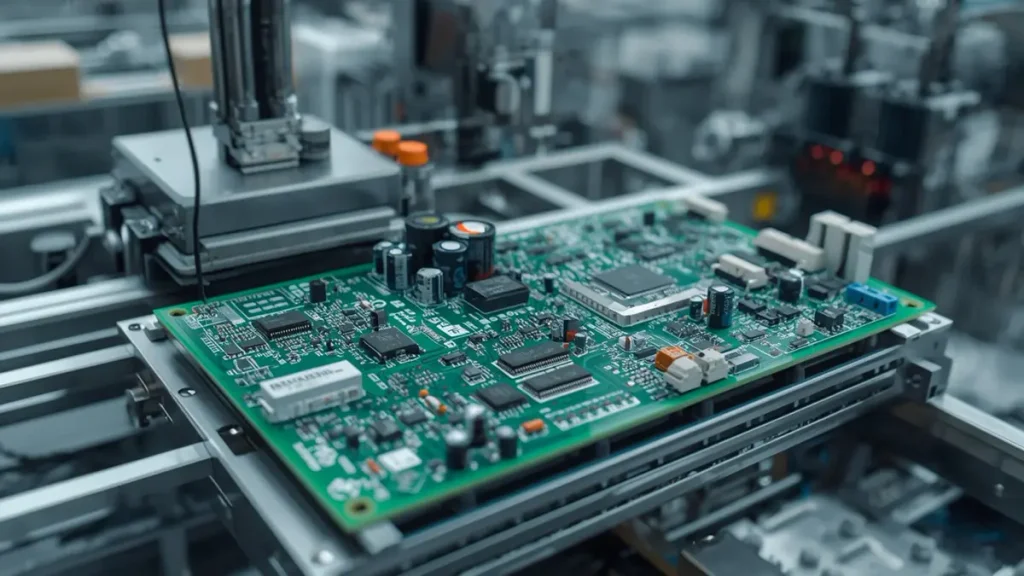
Refrigerator PCB SMT and THT Assembly
SMT assembly is used for surface-mount components such as resistors, capacitors, ICs, and other packages specified in the BOM.
THT assembly may be required for connectors, terminals, relays, or other through-hole components, depending on the board design.
A mixed-technology refrigerator control board may require both processes. The assembly route should be determined by the component package types, PCB design, and production requirements.
The manufacturing package should include:
- Released BOM with manufacturer part numbers.
- Pick-and-place or centroid data.
- Top- and bottom-side assembly drawings.
- Component polarity and orientation details.
- Special soldering or handling instructions.
- Required inspection and test criteria.
BOM Verification and Component Traceability
The BOM is a key document for both procurement and assembly. Incomplete part numbers, inconsistent revisions, unclear package information, or missing approved alternatives can delay a production order.
Before material procurement, the OEM and manufacturer should confirm the BOM revision, manufacturer part numbers, quantities, package types, and sourcing restrictions.
Where traceability is required, the project should define the applicable component, material, and production-lot records.
For repeat orders, maintaining a controlled BOM revision helps prevent unintended component changes between production batches.
Approved Component Substitution
Component availability can change during a product’s lifecycle. A part may become obsolete, enter allocation, have a long procurement lead time, or become commercially unsuitable.
When an original component cannot be sourced as required, an alternative may be evaluated. However, a replacement component must not be treated as automatically interchangeable.
The review should consider:
- Electrical characteristics and tolerances.
- Package dimensions and pin compatibility.
- Temperature and reliability ratings.
- Manufacturer and lifecycle information.
- Assembly process compatibility.
- OEM approval requirements.
Any proposed substitution that affects the approved BOM should be submitted for customer review and authorization before use.
PCB Panelization for Production Efficiency
Panelization arranges multiple PCB units into a manufacturing panel. It can influence handling, production throughput, tooling, and material utilization.
The panel design should consider board dimensions, component placement near the edge, tooling holes, fiducials, separation method, and downstream assembly requirements.
For refrigerator PCB projects, panelization should be evaluated using the actual board outline and assembly constraints. A panel arrangement that is suitable for bare-board fabrication may still require adjustment for SMT assembly or depanelization.
The final panel format should be confirmed before production release.
5. Refrigerator PCBA Inspection, Testing and Quality Control
Inspection and testing should be selected according to the board design, component packages, electrical functions, and customer acceptance criteria.
No single inspection method verifies every aspect of a refrigerator PCBA. AOI, X-ray, electrical testing, and functional testing serve different purposes and should be specified according to the project.
AOI and X-Ray Inspection
Automated Optical Inspection (AOI) can be used to inspect visible assembly features, including component presence, placement, polarity, and certain solder-joint conditions.
X-ray inspection is useful for evaluating hidden solder joints and package connections that cannot be fully inspected optically. Whether it is required depends on the component packages and the customer’s quality requirements.
The inspection plan should identify which boards or components require each method and what acceptance criteria will be applied.
Electrical Testing and Connectivity Verification
Electrical testing can help identify open circuits, short circuits, and connectivity issues, depending on the test method and available access points.
The appropriate method depends on the PCB design, test-point availability, test coverage, and customer requirements.
For a refrigerator control board, the OEM should provide the relevant electrical test specification or agree on the test scope before production. A generic continuity check should not be described as a complete functional validation of the refrigerator system.
Functional Testing Based on Customer Requirements
Functional testing verifies specified board behavior under defined test conditions. It may require a dedicated fixture, test software, programming files, electrical loads, or a customer-provided test procedure.
For example, an OEM may require verification of selected input/output signals, communication interfaces, power functions, or control responses. The actual test items must be defined by the product design authority.
Hongda Circuit can review project-specific testing requirements as part of the PCBA manufacturing discussion. Firmware programming and functional testing are optional, project-dependent services and must be confirmed in the quotation.
Production Traceability and Revision Control
Production consistency depends on using the correct released documents and controlling changes throughout the manufacturing process.
For repeat refrigerator PCB orders, the OEM should establish how the following information is managed:
- PCB and PCBA revision numbers.
- BOM and approved component revisions.
- Manufacturing and inspection records.
- Component or material lot information, where required.
- Approved engineering changes.
- Customer-specific acceptance criteria.
Revision control is particularly important when a refrigerator product has multiple models or board variants that share similar layouts but use different components or firmware.
6. Refrigerator PCB Prototype, Pilot Batch and Mass Production
A refrigerator PCB supplier should be able to evaluate the project at different production stages. Prototype, pilot, and repeat production orders may have different priorities, quantities, documentation maturity, and inspection requirements.
The transition between these stages should be managed through controlled technical documents and customer approval.
Prototype Manufacturing and DFM Feedback
Prototype production helps the OEM verify the PCB design, component selection, assembly feasibility, and interface requirements before larger production commitments.
At this stage, the manufacturer can review the available Gerber files, BOM, assembly drawings, and manufacturing notes to identify potential fabrication or assembly concerns.
The OEM should communicate whether the prototype is intended for electrical evaluation, mechanical fit checks, firmware development, or pre-compliance testing. These purposes can require different assembly and inspection arrangements.
Pilot Production and Sample Approval
Pilot production provides an opportunity to evaluate the manufacturing process using a more representative production build.
Before starting a pilot batch, the OEM should confirm:
- Released PCB and PCBA revisions.
- Approved BOM and component sources.
- Assembly and inspection instructions.
- Required test procedures.
- Sample acceptance criteria.
- Packaging and labeling requirements.
Any issues found during sample evaluation should be resolved through documented engineering changes before the next production release.
Mass Production Process Consistency
Repeat production requires consistent use of approved materials, process instructions, and inspection criteria.
The OEM should define how production changes are communicated and how deviations are handled. The manufacturer should work from the currently released documentation rather than relying on informal instructions from previous orders.
Production quantity, component availability, panelization, and test requirements all influence the manufacturing plan.
A stable production process begins with a clear technical package and an agreed scope of supply.
Production Transfer and Engineering Change Control
When transferring an existing refrigerator PCB project to a new manufacturer, the OEM should provide more than the Gerber files.
A useful transfer package includes the current PCB data, BOM, assembly drawings, test procedures, known manufacturing issues, and approved component alternatives.
Engineering changes should identify the affected revision, reason for change, approval status, and implementation timing. This reduces the risk of mixing different board revisions within the same production order.
7. Refrigerator PCB Manufacturing Cost and Lead Time
Refrigerator PCB manufacturing cost depends on the actual board design and production scope. A quotation for bare PCB fabrication is not directly comparable with a quotation that includes component sourcing, SMT/THT assembly, inspection, and functional testing.
For overseas OEM buyers, the most useful quotation is one that clearly separates the cost and responsibility of each manufacturing stage.
Factors Affecting PCB Fabrication Cost
Bare-board cost is influenced by:
- Board dimensions and production panel utilization.
- Layer count and stackup complexity.
- Base material and copper thickness.
- Finished board thickness and tolerances.
- Minimum trace width and spacing.
- Hole sizes and drilling requirements.
- Surface finish.
- Special fabrication or inspection requirements.
- Order quantity.
A final quotation requires the actual fabrication data and specifications. The product name alone is not enough to establish a reliable unit price.
Factors Affecting PCBA Assembly Cost
PCBA assembly cost depends on the number and types of components, assembly complexity, production quantity, and required inspection or testing.
Important cost factors include:
- Total BOM line items and component quantities.
- SMT and THT process requirements.
- Fine-pitch or special component packages.
- Component availability and sourcing arrangements.
- Stencil and tooling requirements.
- Inspection coverage.
- Programming or functional test requirements.
- Packaging and labeling specifications.
To avoid misunderstandings, buyers should confirm whether the quotation includes the bare PCB, all electronic components, assembly, inspection, testing, and packaging.
Component Availability and Procurement Lead Time
Component procurement can affect the overall project schedule, especially when the BOM includes long-lead-time, allocation-sensitive, or obsolete parts.
The manufacturer should review the BOM before confirming a production schedule. If a component is unavailable, the OEM should decide whether to wait for the original part, provide customer-owned inventory, or evaluate an approved alternative.
A component substitution should not be made without the required customer authorization.
Prototype vs. Volume Production Planning
Prototype and production orders have different cost structures.
A prototype order may involve setup, engineering review, stencil, and material purchasing costs spread across a small quantity. Larger production orders may offer different material utilization and process efficiency, but the final economics depend on the actual design and supply conditions.
For a more useful quotation, provide both the immediate order quantity and the expected repeat-production demand, if known.
8. OEM Refrigerator PCB Manufacturing Services by Hongda Circuit
Hongda Circuit provides PCB fabrication and PCBA assembly for customer-designed electronic control boards. For refrigerator PCB projects, the manufacturing scope is determined by the supplied design files, BOM, technical specifications, quantity, and quality requirements.
Our manufacturing approach is based on the customer’s released documentation rather than a fixed, one-size-fits-all refrigerator board specification.
PCB Fabrication
Hongda Circuit can review customer PCB fabrication data and requirements for refrigerator control-board projects.
The fabrication review is based on the actual Gerber or ODB++ files, drill data, stackup, material, board dimensions, copper requirements, surface finish, and applicable acceptance criteria.
If the project includes special fabrication requirements, they should be identified during the quotation stage so that feasibility and cost can be evaluated before production.
SMT and THT PCBA Assembly
Hongda Circuit supports SMT and THT assembly according to the customer’s BOM and assembly documentation.
Depending on the project, the supply scope can include bare PCB fabrication and component assembly. The exact scope should be confirmed in the quotation, including whether the customer or manufacturer is responsible for component procurement.
This manufacturing model is suitable for OEM buyers seeking a coordinated PCB and PCBA supplier for refrigerator control-board production.
Optional BOM Sourcing and Functional Testing
BOM and component sourcing, firmware programming, and functional testing can be evaluated as optional project services.
These services depend on component availability, customer-approved sourcing requirements, firmware files, test fixtures, test procedures, and acceptance criteria.
They are not automatically included in every PCB or PCBA order. The final quotation should clearly identify which services are included and which require separate approval.
For broader embedded-control manufacturing requirements, see our Embedded Control Board OEM and PCBA services.
For other household appliance control-board applications, visit our Home Appliance Control Board PCBA manufacturing page.
9. What to Include in a Refrigerator PCB Manufacturing RFQ
A complete RFQ helps the manufacturer evaluate the design, confirm production feasibility, and prepare a quotation based on the correct scope.
For a refrigerator PCB fabrication or PCBA assembly inquiry, provide the following information where available.
PCB fabrication files
- Gerber or ODB++ files.
- NC drill files.
- PCB outline and dimensions.
- Layer count and stackup.
- Material and finished board thickness.
- Copper thickness and surface finish.
- Special fabrication requirements.
PCBA assembly files
- BOM with manufacturer part numbers.
- Pick-and-place or centroid file.
- Assembly drawings.
- Component polarity and orientation details.
- Approved vendor list or approved alternatives, if applicable.
- Programming and functional test requirements, if applicable.
Commercial and production information
- Prototype or production quantity.
- Expected repeat-order quantity or forecast.
- Required delivery schedule.
- Delivery destination.
- Packaging and labeling requirements.
- Inspection, traceability, and acceptance requirements.
If some specifications are not yet finalized, identify them as open items. The manufacturing team can review the available information and clarify what is needed before the quotation is confirmed.
Request a Refrigerator PCB quotation
Send your project files and requirements to:
Email: sales@pcbkr.com
Website: https://www.pcbkr.com
Hongda Circuit will review the submitted manufacturing information and determine the appropriate PCB fabrication and PCBA assembly scope for your project.
10. Frequently Asked Questions About Refrigerator PCB Manufacturing
What files are required to get a Refrigerator PCB manufacturing quotation?
For PCB fabrication, provide Gerber or ODB++ files, NC drill data, board dimensions, stackup, material, copper thickness, surface finish, and required quantity.
For PCBA assembly, also provide the BOM, pick-and-place file, assembly drawings, and any special process or testing requirements. If some files are not available, send the current design package and identify the missing information for review.
Can Hongda Circuit manufacture the PCB and assemble the complete Refrigerator PCBA?
Yes. Hongda Circuit supports PCB fabrication and PCBA assembly for customer-designed control-board projects, including SMT and THT assembly.
The quotation can be prepared according to the required supply scope. Buyers should confirm whether the order includes bare PCB fabrication, component sourcing, assembly, inspection, and testing.
Can you support refrigerator PCB prototypes and mass production?
Hongda Circuit can review prototype, small-batch, and production requirements. The suitable manufacturing arrangement depends on board complexity, BOM availability, production quantity, and the required inspection and test scope.
Please provide the immediate order quantity and expected repeat-production demand when requesting a quotation.
Can you source components or replace unavailable parts in the refrigerator PCB BOM?
BOM and component sourcing can be evaluated as a project-dependent service. If a listed component is unavailable, a potential alternative can be reviewed against the electrical, package, and customer requirements.
Any substitution requiring customer approval must be authorized before the revised component is used in production.
What affects Refrigerator PCB manufacturing cost and delivery time?
The main factors include PCB dimensions, layer count, material, copper thickness, fabrication tolerances, component quantity, assembly technology, component availability, production quantity, and inspection or functional testing requirements.
For an accurate quotation, send your Gerber files, BOM, target quantity, and required delivery schedule to sales@pcbkr.com.
Refrigerator PCB – Data Sheet
| Item | Description |
|---|---|
| Product Type | Refrigerator Control PCB / PCBA |
| Application | Refrigerator Electronic Control Systems |
| PCB Material | FR-4 or customer-specified material |
| Layer Count | Customized |
| PCB Dimensions | Customized |
| Board Thickness | Customized |
| Copper Thickness | Customized |
| Min. Trace Width / Spacing | According to design |
| Min. Hole Size | According to drill specifications |
| PCB Fabrication | Customized PCB Manufacturing |
| Assembly Technology | SMT / THT |
| Component Types | SMD and Through-Hole Components |
| Component Sourcing | Customer-Supplied or Optional BOM Sourcing |
| Inspection | AOI / X-Ray, according to assembly requirements |
| Electrical Testing | According to customer specifications |
| Functional Testing | Optional, project-dependent |
| Programming | Optional, subject to firmware requirements |
| Production Volume | Prototype / Small Batch / Mass Production |
| Quality Requirements | According to customer specifications |
| Customization | Gerber, BOM, Stack-up and Assembly Requirements |
All specifications and manufacturing options are customized according to the customer’s Gerber files, BOM, electrical requirements, and product application. Inspection, component sourcing, firmware programming, and functional testing are subject to project requirements and quotation confirmation.
About Author
David Chen LinkedIn Profile
David Chen is a Senior RF/PCB Process Engineer at Shenzhen Hongda Circuit Technology Co., Ltd., with over 12 years of experience in high-frequency PCB fabrication, impedance-controlled stack-up design, and Rogers/PTFE laminate processing. He also boasts an extensive professional background in PCBA manufacturing, PCBA testing, and PCBA optimization, with specialized expertise in high-precision PCBA fault analysis and rigorous PCBA reliability testing. The author has worked with high-layer-count server PCB fabrication, ultra-low-loss backplane stackups, and thermo-mechanical reliability optimization for AI infrastructure projects involving 112G and 224G PAM4 architectures. Skilled in complex circuit design and cutting-edge advanced PCB manufacturing processes, he delivers solutions that elevate product durability and performance across industrial applications. His technical articles focusing on PCBA manufacturing workflows and testing methodologies are widely cited by industry peers and technical platforms, and have gained attention and recognition from industry colleagues.